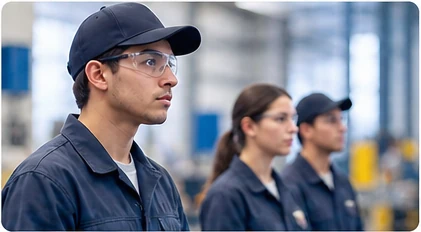
The pipeline is shrinking.
Fewer people are entering skilled trades while experienced professionals continue to retire.


Executive Guide · Skilled Trades Workforce
Understand why experienced skilled-trades talent is becoming harder to replace, which production-critical professions are most exposed, and how manufacturers can strengthen the workforce pipeline over time.
Why This Matters
Fewer people are entering skilled trades while experienced professionals continue to retire.
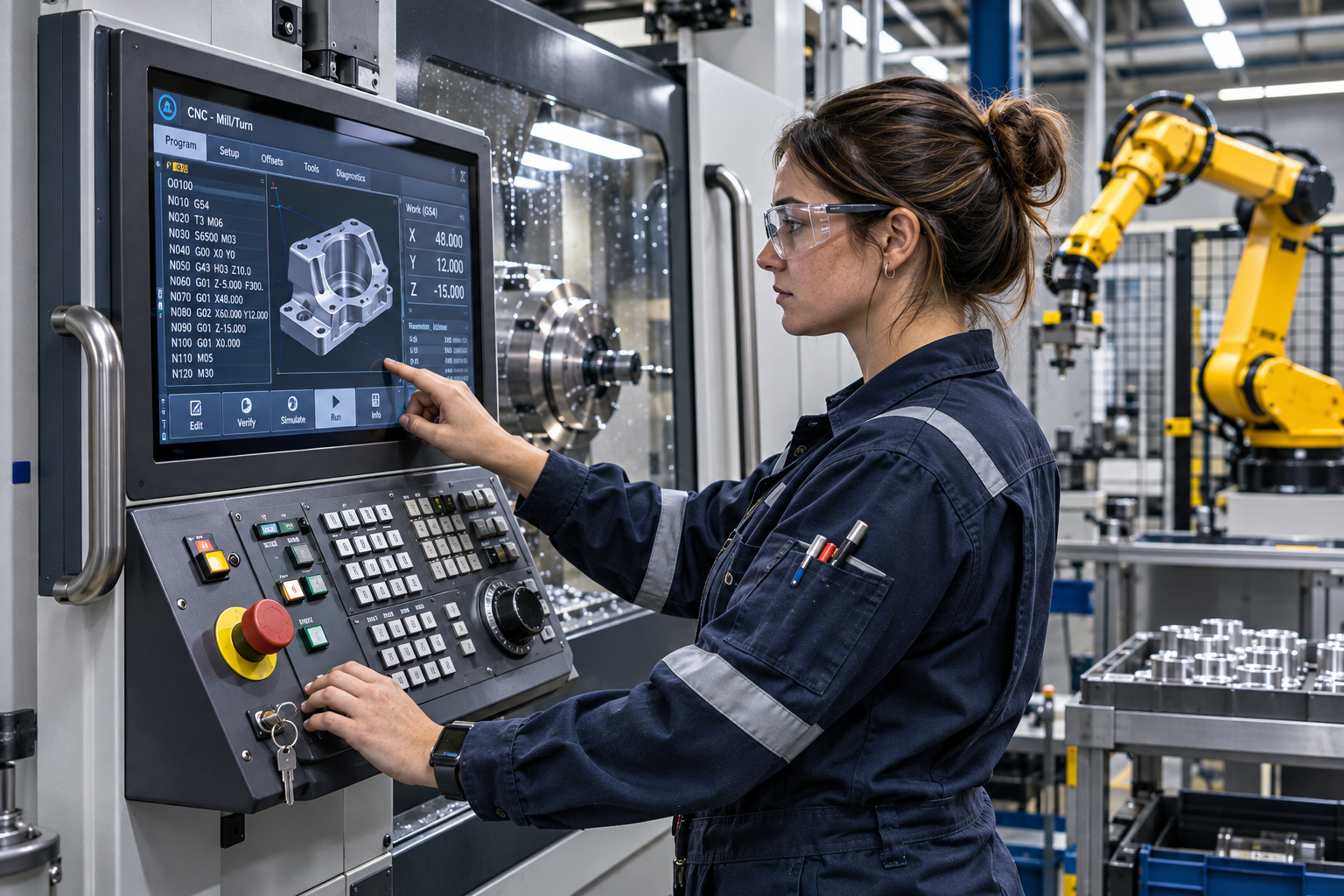
Modern manufacturing requires more technical expertise than ever before.
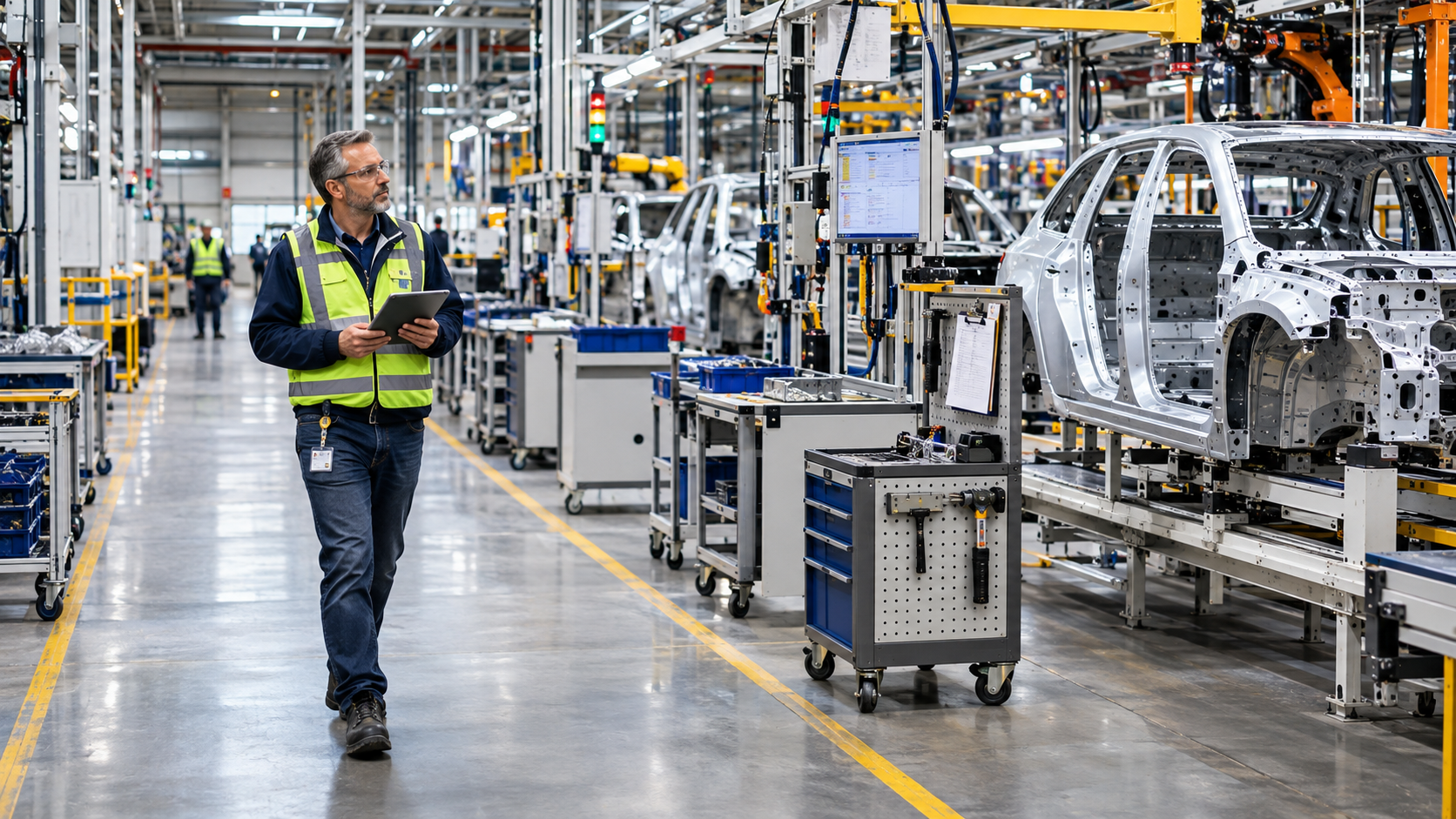
Manufacturers compete for a limited pool of experienced professionals, creating longer vacancies and greater operational risk.
net new manufacturing employees could be needed between 2024 and 2033.
Deloitte + The Manufacturing Institute ↗manufacturing jobs could remain unfilled if workforce challenges are not addressed.
Deloitte + The Manufacturing Institute ↗is a typical apprenticeship timeline for electricians, illustrating how long experienced trade capability can take to develop.
McKinsey & Company ↗technician job openings may need to be filled across manufacturing and adjacent industries between 2025 and 2030.
Deloitte + The Manufacturing Institute ↗Why the Skilled Trades Pipeline Is Shrinking
Why the Shortage Persists
The shortage did not develop overnight. It reflects several long-term workforce trends that have gradually reduced the supply of experienced skilled trades professionals.
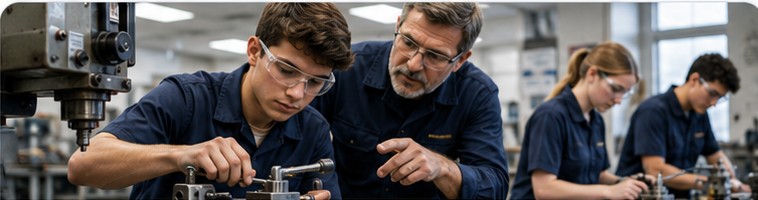
Many young workers are steered toward four-year academic paths while fewer enter machining, toolmaking, industrial maintenance, electrical, and mechanical trades pipelines.
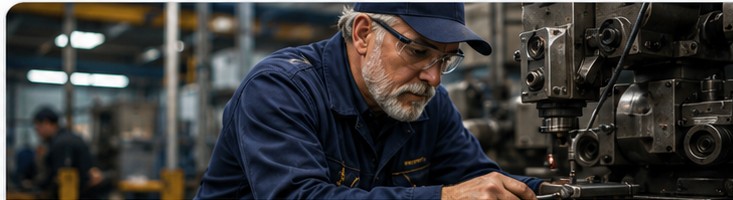
Across U.S. manufacturing, experienced tradespeople are retiring faster than they can be replaced. Decades of troubleshooting knowledge, equipment familiarity, and plant-specific expertise leave with them, while developing the next generation of skilled professionals takes years.
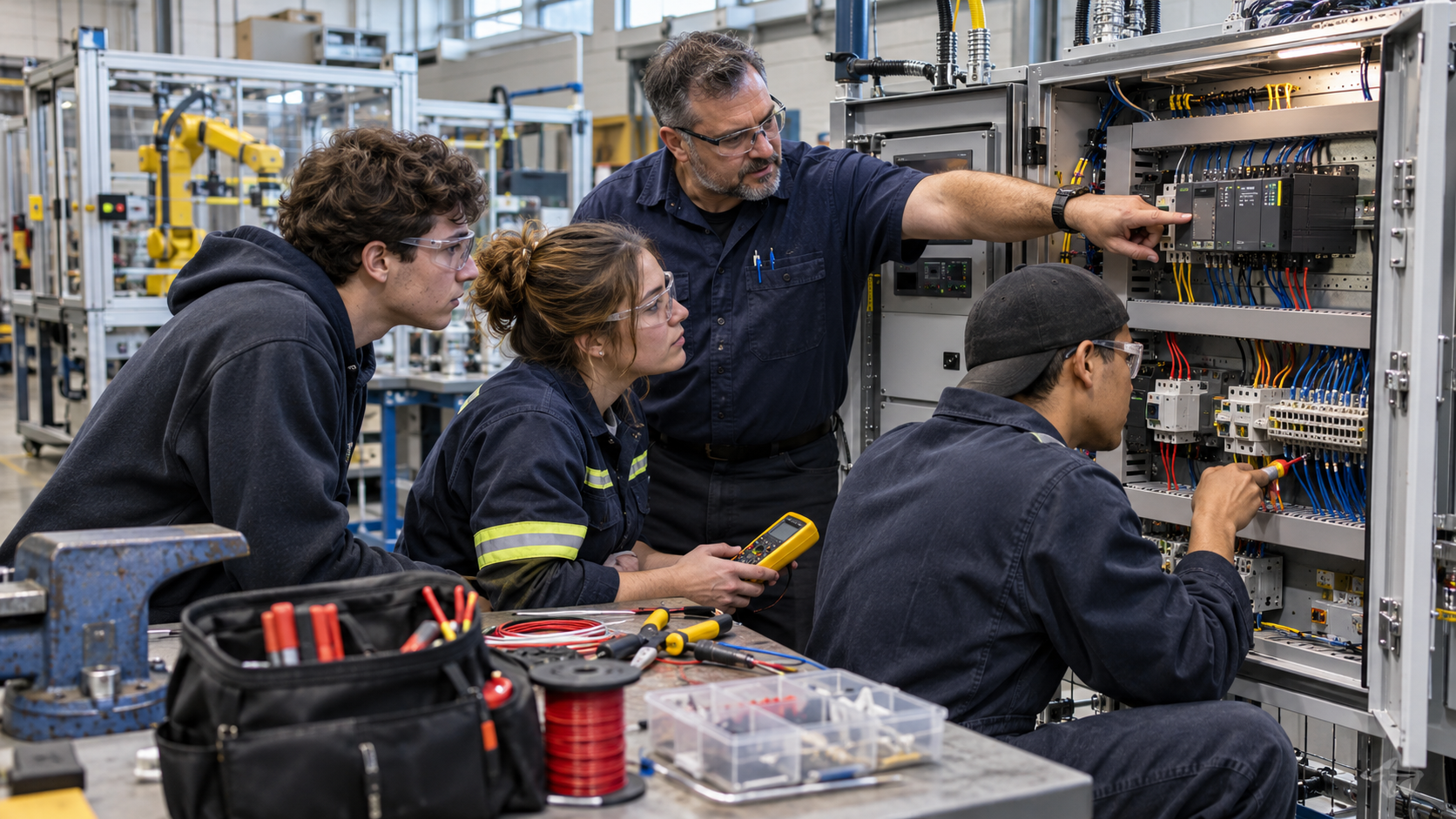
Even where technical programs exist, they may not produce the volume or specialization required for die casting, machining, automation, maintenance, and advanced quality environments.
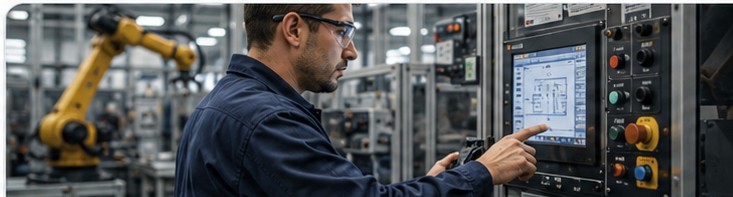
Modern trades increasingly combine mechanical, electrical, controls, robotics, quality, data, and process knowledge. The skill bar has risen faster than many local pipelines can adapt.
CAPABILITY AT RISK
Experienced skilled-trades knowledge can leave the plant faster than it can be rebuilt, creating operational risk that extends beyond the vacancy itself.
Experienced tradespeople develop pattern recognition and judgment that help diagnose recurring failures, stabilize equipment, and shorten recovery time.
Years of plant exposure create an understanding of equipment behavior, process limits, tooling history, and failure modes that is rarely captured fully in documentation.
Senior technical professionals do more than perform the work. They coach less-experienced employees, transfer practical judgment, and accelerate the next generation’s development.
Production-Critical Roles Most Affected
The shortage extends across the technical professions that keep modern manufacturing operations running, improving, and producing.
Plant maintenance, equipment reliability, troubleshooting, preventive maintenance, and asset performance.
Tool and die development, die maintenance, tooling optimization, repair, and production support.
CNC machining, manufacturing processes, production engineering, process improvement, and technical production support.
Industrial electrical systems, PLC controls, diagnostics, controls engineering, and plant electrical support.
Industrial automation, robotics, integration, programming, commissioning, and automated production systems.
Dimensional inspection, CMM, metrology, quality systems, process quality, and technical quality engineering.
How manufacturers are responding
Retain senior technical workers, transfer knowledge, and reduce dependency on a small number of critical people.
Invest in apprenticeships, technical-school partnerships, internal training, and structured development pathways.
When critical roles remain difficult to fill, manufacturers can widen the search while maintaining the same standards for technical qualification, fit, and mobility.
From Insight to Action
IG Talent Solutions helps manufacturers access qualified technical professionals through parallel U.S. and Mexico recruiting.
Workforce strategy
Understanding the skilled-trades pipeline is one part of a broader workforce decision. These connected resources help manufacturers evaluate the hiring challenge, the financial impact, and the pathways for expanding access to qualified technical talent.
See how the shrinking trades pipeline connects to the larger structural hiring challenge.
Explore the Challenge →Quantify what an unfilled technical role may be costing your plant each month.
Estimate the Impact →Understand how qualified North American professionals can support U.S. manufacturing roles.
Understand the TN Pathway →Common questions
Training is essential, but it is a long-term strategy. Many skilled trades roles require years of development and plant-specific experience, so training alone does not solve urgent vacancies.
When repeated local searches fail to produce qualified candidates for production-critical roles, manufacturers should evaluate broader domestic opportunities and qualified professionals from the United States, Mexico, and Canada.
When the role, candidate credentials, and work-authorization pathway align, cross-border recruiting can add another qualified source of technical professionals.
Developing experienced skilled trades professionals takes years, not weeks. Technical training builds the foundation, but production knowledge, troubleshooting judgment, equipment familiarity, and independent problem-solving are developed through sustained hands-on experience.
Manufacturers can combine retention, internal development, apprenticeships, and partnerships with technical schools with broader recruiting for immediate production-critical needs. The objective is to protect current operations while building a stronger pipeline for the future.
Ready to Talk?
