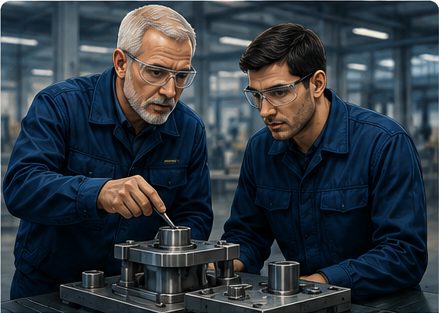
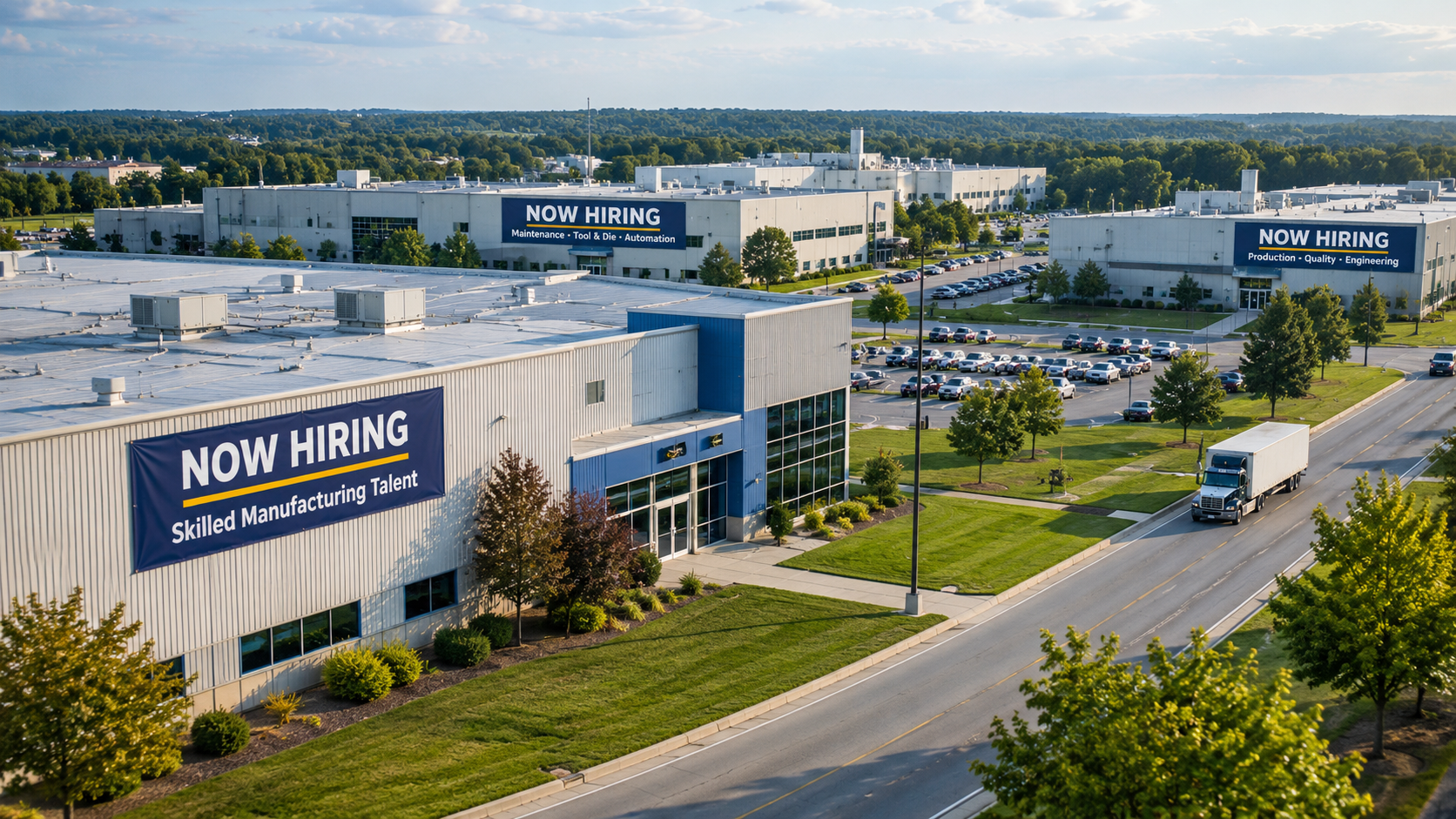
Manufacturing leader overlooking a large production facility

THE HIRING CHALLENGE

Why the Local Labor Market Is No Longer Enough.

For decades, manufacturers relied on local labor markets to fill critical positions. Today, experienced technical professionals are increasingly difficult to find nearby. Expanding access to qualified talent across North America can open new hiring possibilities.

Yesterday’s hiring model was built for
a labor market that no longer exists.

Manufacturers are searching harder, raising wages, and stretching internal teams. But more recruiting activity cannot solve the problem when the same limited talent pool is being searched again.

THE OLD MODEL

Local hiring limits the qualified professionals you can reach.

  • Limits the addressable candidate pool to one geographic market
  • Competes repeatedly for the same local candidate base
  • Extends vacancy duration when the search strategy does not expand with the need
TODAY’S MANUFACTURING REALITY

Specialized professionals require a wider market.

  • Access experienced specialists who may not exist within commuting distance
  • Match technical capability to the role instead of letting proximity drive the search
  • Build a repeatable hiring channel for hard-to-fill manufacturing functions

The capability you need is out there.

Expanding the market makes it possible to reach professionals beyond the limits of a local search.

THREE MARKET FORCES

Manufacturing Hiring Has Fundamentally Changed.

Three interconnected forces are making experienced manufacturing talent increasingly difficult to find, particularly within local labor markets.

Experienced specialist demand in manufacturing
01

MARKET FORCE 01

Manufacturing Demand Has Accelerated

New manufacturing investments, reshoring, nearshoring, and supply chain localization are creating additional competition for experienced technical and operational professionals in many U.S. manufacturing regions.

Manufacturing workforce demographics
02

MARKET FORCE 02

The Experienced Workforce Is Shrinking

As experienced tradespeople and technical specialists retire, manufacturers face the challenge of replacing knowledge that takes years to develop. Training programs are essential for the future, but cannot always address today’s urgent vacancies.

Modern manufacturing complexity and automation
03

MARKET FORCE 03

Manufacturing Skills Continue to Evolve

Automation, robotics, advanced controls, complex production processes, and increasingly demanding quality systems require specialized experience that cannot be developed overnight.

The Talent You Need May Be Beyond Your Local Market.

COMPENSATION ≠ SUPPLY

Higher wages can win talent.
They can’t create it.

When manufacturers compete for the same limited pool of experienced professionals, increasing compensation may attract candidates from neighboring employers. But moving talent between companies does not increase the number of qualified people available in that market.

HIGHER WAGES Increase competition
EXISTING TALENT MOVES Between employers
TOTAL SUPPLY STAYS LIMITED
The constraint is talent supply, not compensation alone.

OPERATIONAL IMPACT

Every Open Role Has an Operational Cost.

When a critical manufacturing position remains vacant, the responsibilities don't disappear. They shift to other employees, often affecting production, operational performance, and the plant's ability to grow.

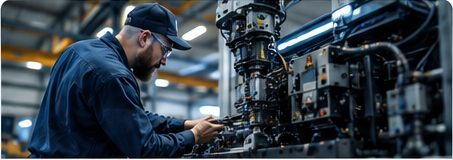
Maintenance technician inspecting industrial equipment in a manufacturing plant

PRODUCTION

Critical Work Must Still Be Done

Supervisors, technicians, engineers, and managers take on additional responsibilities while maintaining daily operations.

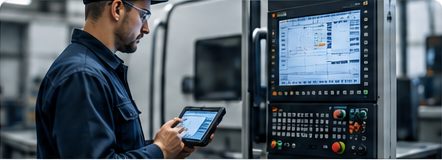
Manufacturing maintenance specialist diagnosing equipment using a digital control system

PERFORMANCE

Improvement Takes a Back Seat

Preventive maintenance, troubleshooting, quality initiatives, and continuous improvement projects may be delayed as teams focus on urgent priorities.

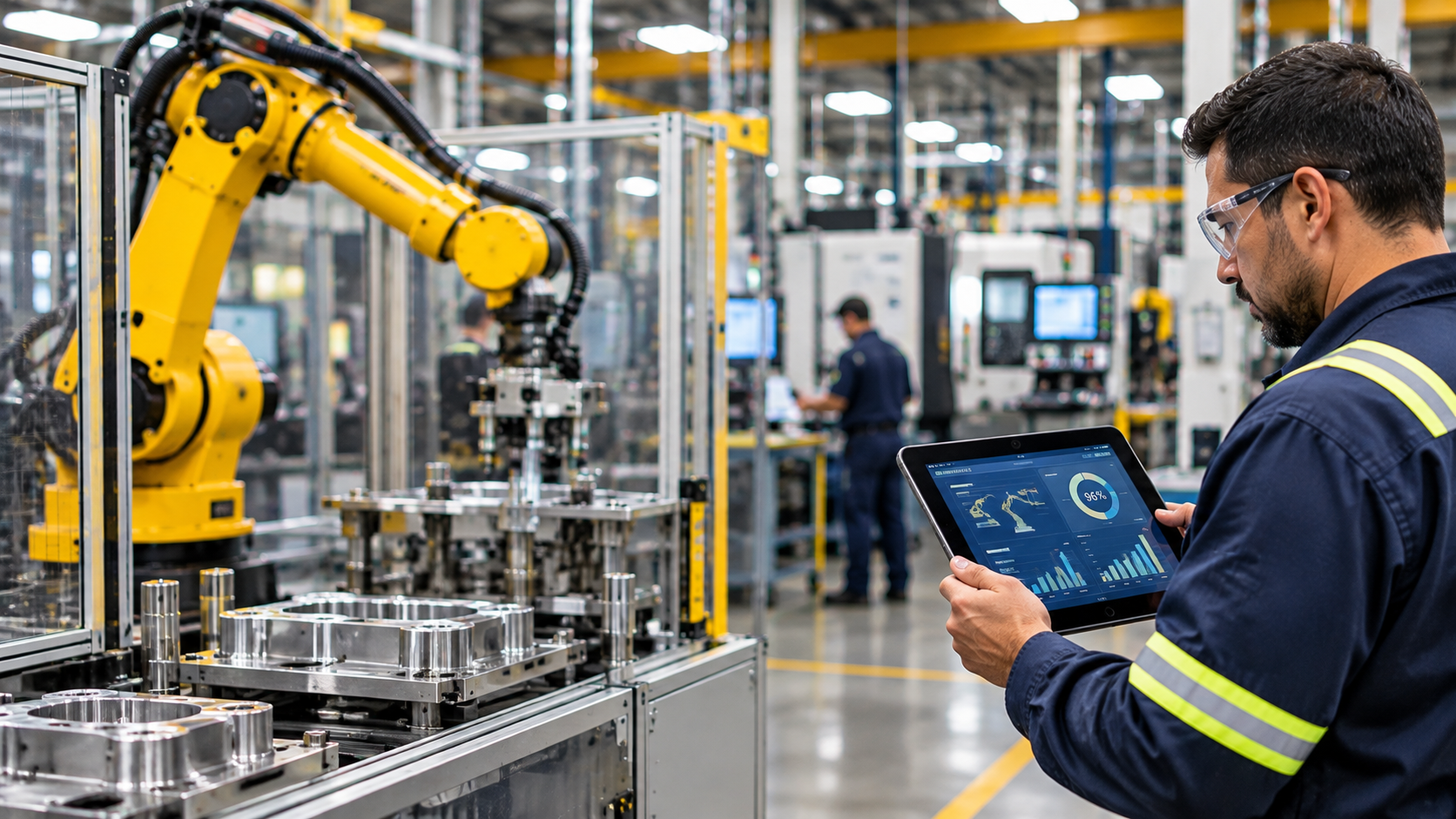
Automated manufacturing production line with industrial robots

GROWTH

Tomorrow’s Priorities Get Delayed

Engineering and leadership capacity is consumed by daily operational demands instead of supporting launches, expansion, and future manufacturing programs.

COST OF VACANCY CALCULATOR

What Is an Open Manufacturing Position Really Costing Your Operation?

Estimate how an unfilled critical position may affect overtime, productivity, quality, and other operating costs.

Calculate the Cost of an Open Position

A NEW HIRING STRATEGY

Build the workforce around capability, not
geography alone.

A resilient technical workforce strategy broadens access while preserving qualification, compliance, relocation support, and accountability.

REACH

Expand the Candidate Pool

Search across a broader North American talent market instead of depending exclusively on one local candidate pool.

SKILLS

Prioritize Skills

Evaluate practical manufacturing experience, technical depth, and role fit before proximity.

SPEED

Structure the Hiring Process

Use a structured process for sourcing, qualification, customer selection, documentation, mobility, and onboarding.

RESILIENCE

Build Repeatable Access

Create a repeatable pipeline of qualified technical professionals instead of rebuilding the search from zero for every critical vacancy.

Broader reach only creates value when qualification, documentation, mobility, and onboarding are managed as one process.

Explore the TN Visa Guide

FREQUENTLY ASKED QUESTIONS

Questions Manufacturing Leaders Ask About the Talent Challenge

Is the manufacturing talent shortage temporary?
Market conditions may ease or intensify, but several underlying challenges are structural. Retirements, evolving technologies, and the time required to develop experienced technical professionals mean that critical skills can remain difficult to find even when hiring activity slows.
Why can't manufacturers simply train more people?
Training is essential for long-term workforce development. However, specialized technical capabilities often take years to develop, while critical vacancies may require experienced professionals much sooner. Manufacturers need both approaches.
Which manufacturing positions are most difficult to fill?
Challenges frequently arise in maintenance, tool and die, controls and automation, manufacturing and process engineering, quality and CMM, and technical plant leadership. The difficulty varies by location, industry, and required experience.
How can manufacturers access qualified talent beyond their local market?
A broader search can reach experienced professionals elsewhere in the United States, Mexico, and Canada. The key is to prioritize technical qualifications, relevant manufacturing experience, and practical mobility requirements rather than limiting the search by commuting distance.

LET'S GET STARTED

Let's Find the Talent Your Operation Needs.

Tell us about the positions you're struggling to fill. Our team will review your requirements and discuss how we can support your search.